
Have You Counted Your Falls?
Here is the quiet lie at the center of how most CEOs, entrepreneurs, and owners measure themselves:
“The strongest leaders are the ones with the fewest failures.”
They are not. The strongest leaders are simply the ones who built the most out of the mistakes they made.
The Story
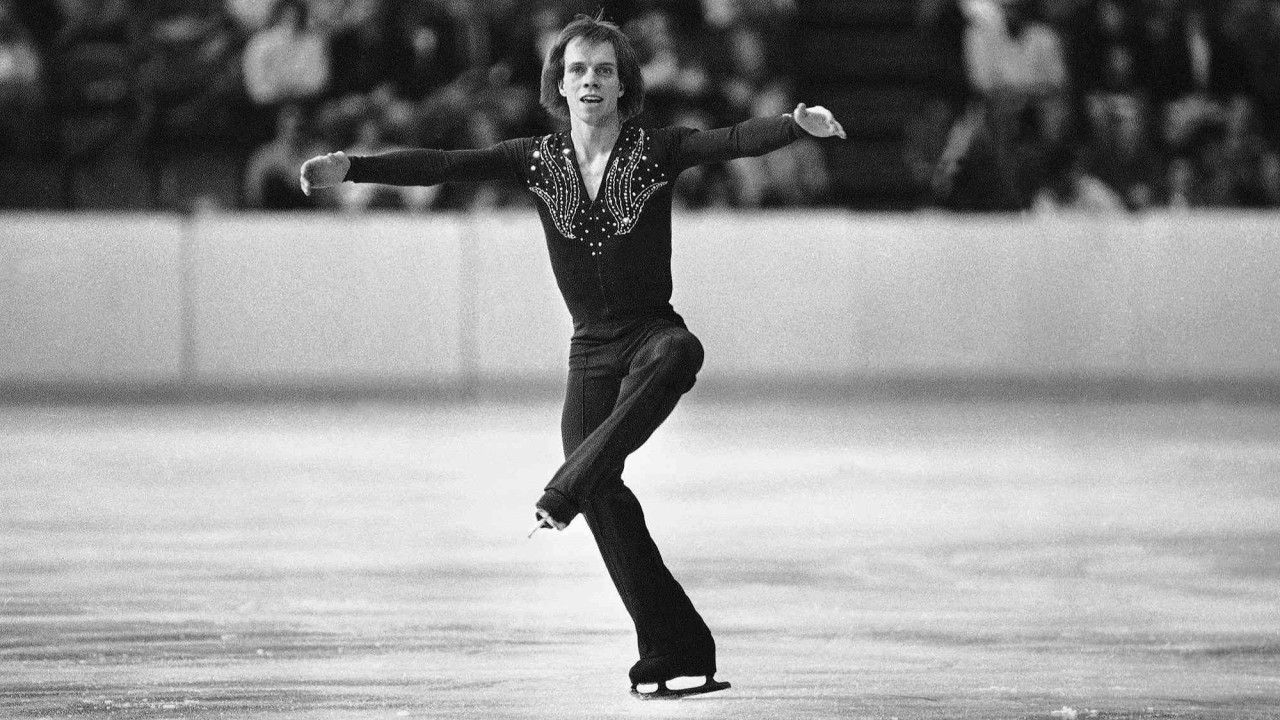
Scott Hamilton has fallen 41,600 times.
That’s the actual number. He counted.
Over the course of his career, Scott Hamilton, the 1984 Olympic gold medalist, tracked every single time he hit the ice.
Forty-one thousand, six hundred times.
And here is the thing about Scott: he had been falling his whole life, long before he ever put on skates.
He was adopted as an infant when his biological mother decided she couldn't care for him. As a toddler, he contracted a mysterious illness that made him stop growing entirely.
At one point doctors gave him six months to live.
Then they changed their minds.
Then they offered a string of wrong diagnoses for years, unable to pinpoint what was happening. He spent most of his early childhood in and out of hospitals.
When he finally started skating at age nine, he was undersized and largely unremarkable at the national level.
He finished ninth. Then ninth again. Then seventh.
A world-class judge looked him square in the eye and told him he was too short to ever be competitive.
Then his mother died.
Dorothy Hamilton was Scott's biggest cheerleader. She watched him skate at the 1976 Junior National Championships while she was in the middle of chemotherapy, just weeks after surgery. The 1977 Nationals were the last competition she ever attended. She passed away later that year from breast cancer. Scott was a teenager. He has described her as the center of his universe.
He kept skating… and he started winning.
He made the 1980 Olympic team, finished fifth, and then went on a tear that produced four consecutive U.S. Championships and four consecutive World Championships.
In 1984, in Sarajevo, he won the gold medal. The backflip that had been barred from official competition (because essentially no one else could pull it off), the signature move he saved for exhibitions just to light up the crowd, had become the symbol of something deeper than athletic achievement. It was the signature of a man who had learned, through genuine hardship, that the floor is not the end of the story.
Then, he got cancer.
Twenty years after losing his mother to cancer, Scott was diagnosed with testicular cancer. Four rounds of chemotherapy. Surgery requiring 38 staples. He was back on the ice four months later. His first words into the microphone: "I win!"
Then a brain tumor in 2004. Another in 2010, with complications during surgery that produced an aneurysm. Then a third in 2016.
Here’s what he said after that third diagnosis:
"I was much more in control. I had survived two previous ones and cancer, so I approached this adventure with calmness and a better understanding of the process."
Calmness. And a better understanding of the process.
That's beyond toughness… that’s something else entirely.
The Pattern
This is where most leaders get it wrong.
We talk about resilience like it’s another version of toughness. Like the goal is to build a thicker skin, a harder exterior, a stronger stomach for adversity.
We point to Navy SEALs.
We talk about grit and fortitude.
We picture cold showers and clenched jaws.
We treat resilience as the capacity to take a hit without flinching, to be the kind of person who simply does not go down.
But that is toughness. And resilience is not the same thing.
Toughness is about resistance. It is the capacity to absorb punishment without breaking. It is largely static. You either have it or you do not, and it is measured by how much you can withstand before you quit.
Resilience is about return. It is the capacity to be broken, or at least bent significantly, and come back. Resilience does not assume you will stay standing. It assumes you will go down. The question is whether you get back up, and whether you come back changed because of it. Resilience is dynamic. It compounds. It transforms the person who practices it.
The difference is not semantic. It changes how you plan, how you lead, and what you tell yourself when things fall apart.
Scott Hamilton was not too tough to be afraid. He has said the fear of his cancer diagnosis was unlike anything he had ever experienced. He was not too tough to come back diminished after his second brain surgery. His own words. He did not power through untouched. Through his career, he fell… a lot. 41,600 times by his own careful count. He just learned something every single time he hit the ground.
That is what resilience actually is.
It’s rapid reframing.
It is the practiced ability to look at a circumstance that did not go the way you expected and ask quickly: what does this teach me, and how do I use it? Not in a forced, relentlessly positive kind of way. In a disciplined, almost athletic kind of way. A skill you build by using it.
We assume resilience means having the constitution of a Marine. But strip away the mythology for a moment. What is resilience, really, other than committing to try again quickly when things didn’t go right the first time? The gap between a resilient leader and a brittle leader is not a gap in pain tolerance. It is a gap in how fast they reframe.
The Principle
The leaders who build what matters are not the ones who never fall. They are the ones who learned something every time they hit the ground.
The goal is not to fail less. The goal is to reframe faster. To see failure not as a detour around the path to success, but as the path itself. The best skaters are not the ones who avoid the falls. They are the ones who got better by going through them.
James Allen described this kind of leader more than a century ago, and nothing has made it less true:
"Those strong ones... only recognize failure as one of the pathways to attainment; who make all conditions serve them, and who think strongly, attempt fearlessly, and accomplish masterfully."
Make all conditions serve them. That is a different posture than simply enduring conditions until they pass. It is the posture of someone who has accepted, at a bone-deep level, that hardship is not an interruption of the work. Hardship is part of the work.
The Practice
Here is a reframe I find genuinely useful.
Imagine that success at the thing you are building only comes after a fixed number of failed attempts. Not as a vague possibility, but as a guaranteed reality. Scott Hamilton fell 41,600 times. The founder of Canva reportedly sat through more than 100 investor rejections before she got a yes. Thomas Edison ran more than 1,000 failed experiments before he found the right filament for the lightbulb. What if the number of required failures before your breakthrough was already written somewhere, and you just did not know it yet?
If that were true, how would you act differently? You would stop treating each failure as a verdict and start treating it as progress. You would move faster through the experiments. You would take better notes on the way down.
Rapid reframing is the discipline of remembering that even though you do not control everything, you do control how you respond to everything. It means recognizing that how you respond to hardship shapes you more than the hardship itself. The speed of the reframe is the skill. And like every skill Scott Hamilton ever developed, you get better at it by falling and getting up again.
Your assignment this week is simple. Name the thing you are building that will only succeed after a series of experiments and failures. Say it out loud. Write it down. Then commit to one practice: the next time it does not work, do not ask why this happened to you. Ask what it is teaching you, and how fast you can use it.
How We're Failing
At Branches, we are building a global community with a unique focus: executives, entrepreneurs, and owners in 27 countries who believe their businesses exist to benefit their communities. That is a beautiful mission. It is also a hard one. A big part of our work involves making big asks. Lots and lots of asks.
Asking CEO’s to step up their leadership. Asking entrepreneurs to trust us with their business strategy. Asking high level leaders to learn how to trust their teams. Asking donors to write big checks, and give to a cause bigger than themselves. Asking people to trust that building a business for the benefit of their community is worth it.
And along with big asks comes big moments of rejection. One time I flew to Thailand to ask an influential entrepreneur to join Branches Worldwide (our nonprofit division). He said no. That one hurt.
Another time I drove six hours to make a one hour meeting. I was meeting with a former White House employee to ask him to join our board. He also said no.
But other incredible people said yes. And over the years, we’ve grown. Despite the failures, we’ve grown the Branches community to operate in 27 countries, impacting thousands of lives. And… we’ve experienced our share of 41,600 failures, rejections, and restarts.
But the goal was never to have a clean story. The goal is to build a true one.


